

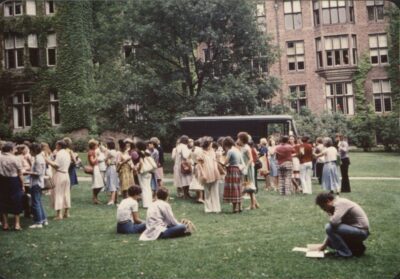
History of the Big Berks
The Big Berks, formally known as the Berkshire Conference on the History of Women, Genders, and Sexualities, is a biennial event hosted by the Berkshire Conference of Women Historians. First held in 1973 at Douglass College, the conference quickly became a landmark gathering for scholars in the fields of women’s, gender, and sexuality history. Over the decades, it has grown into the largest and most prestigious academic conference of its kind, drawing thousands of participants from around the world. The Big Berks has consistently served as a vital space for intellectual exchange, mentorship, interdisciplinary collaboration, and community-building, while also evolving to reflect new directions in feminist and historical scholarship. Each conference is typically hosted by a different academic institution and includes hundreds of sessions, plenaries, workshops, performances, and social events that foster scholarly rigor and transformative dialogue.
Future of the Big Berks
In January 2026, alongside the adoption of updated bylaws that transition the organization from a co-president structure to a President Elect model, the Board voted to move the Big Berks from a triennial to a biennial schedule. This shift aligns directly with the new four-year leadership cycle—two years as President Elect followed by two years as President—and ensures that each President organizes a Big Berks during their term in office. Moving to a biennial model strengthens continuity, supports long-term planning, and provides greater stability for one of the organization’s signature events.
Planning for the next iteration of the Big Berks is already well underway. The 2027 Big Berks is scheduled to take place in Minneapolis from June 10–13, 2027, and we look forward to gathering our community for what promises to be a dynamic and generative convening. The Executive Committee is also actively identifying potential locations for the 2029 conference and will share additional details with the membership soon. As always, we remain committed to preserving the conference’s scholarly rigor, collaborative spirit, and vibrant networking opportunities, with renewed emphasis on disciplinary support, mentorship, and inclusive access for all historians.